Ciabatta: the recipe
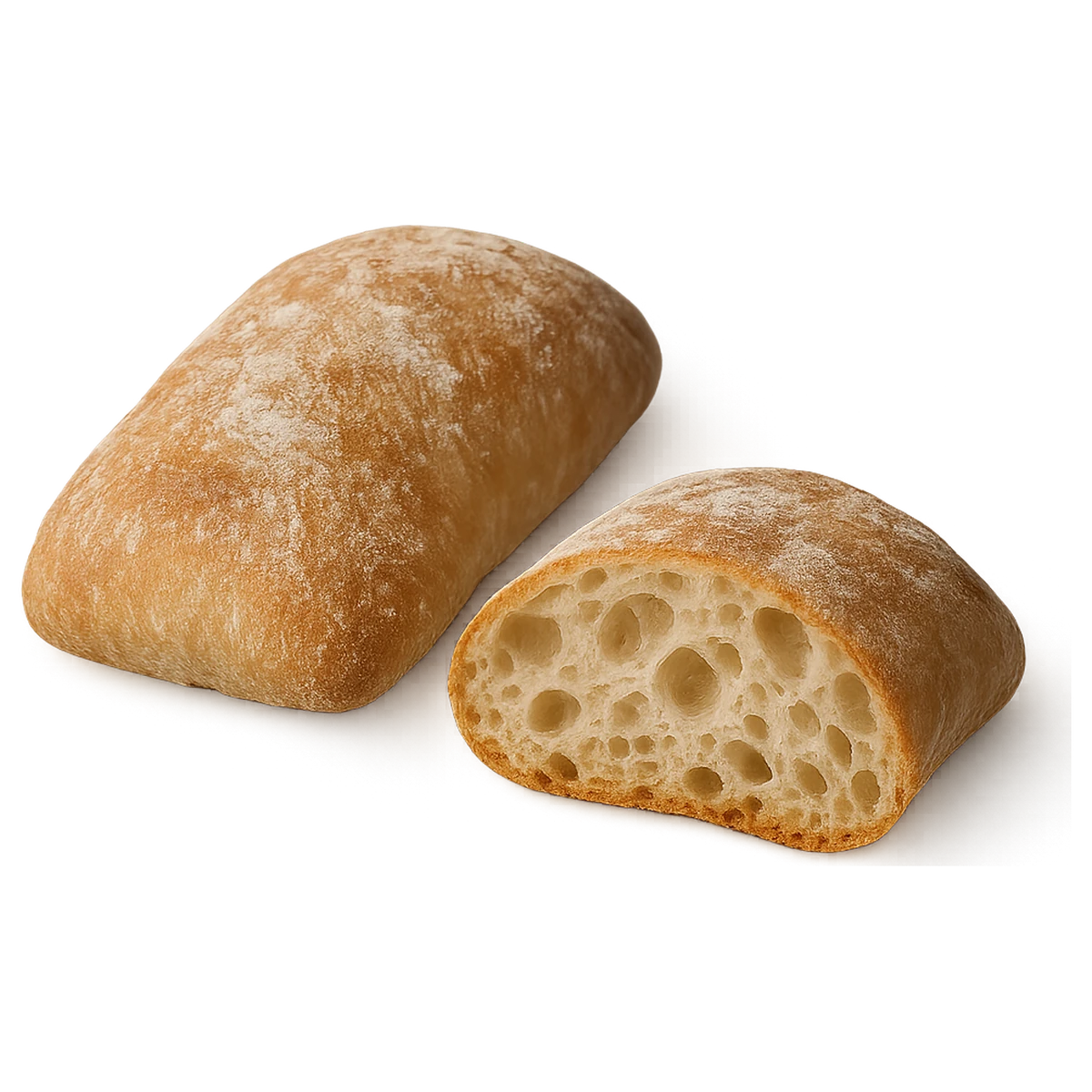
Ciabatta is an extraordinary bread, an Italian invention and a surprisingly recent one: It was born in 1982, in Adria.
The inventor of ciabatta, Arnaldo Cavallari, wasn't a professional baker but a former rally driver, Italian champion, and owner of the family mill. At the time, Italian mills were in deep crisis, and bakeries were being flooded with French baguettes, perfect for sandwiches and much loved by consumers. Irritated by the French success and determined to save his business, Cavallari shut himself in the lab with baker Francesco Favaron to create a wholly Italian alternative. He experimented with strong flours able to absorb huge amounts of water (over 75-80%) and with long fermentation times. When they pulled the first loaves from the oven — flat, wide and a bit misshapen — they noticed they looked like a house slipper. So they named it "Ciabatta Polesana" (after the Polesine area), later registering the "Ciabatta Italia" trademark.
A few years later, master baker Piergiorgio Giorilli refined the ciabatta recipe, folding in his now-famous "Biga Giorilli".
Today ciabatta, alongside the baguette, is considered one of the most famous and widely eaten breads in the world.
This recipe is freely inspired by, or adapted from, a formula by Master Piergiorgio Giorilli.
At a glance
- Method: Preferment, without autolyse
- Preferment: Biga — 91% of the flour
- Mixing: Stand mixer
- Number of pieces: 6
- Weight per piece: 290 g
- Preferment weight: 1318 g
- Dough weight: 423 g
- Total dough weight: 1740 g
Want to change the number of pieces, their weight or anything else? The calculator redoes the quantities. Open the calculator
Ingredients
Quantities for 6 pieces of 290 g, kitchen at 27 °C
Preferment
- Wheat flour (W320)909 g
- Water400 g
- Yeast9.1 g
Dough
- Wheat flour (W260)91 g
- Water300 g
- Salt20 g
- Barley malt10 g
- Yeast1.8 g
Want to change the ingredients or use your own flour? The calculator redoes quantities and timing. Open the calculator
Method
- Biga: make it and let it ferment (at a controlled temperature, 18 °C) (18 hours)
- Weigh the ingredients
- Make a mix with 6 ice cubes and 280 g of water at room temperature (to get it to 0 °C)
- Dissolve the yeast in the water
- Mix roughly
- Transfer to a container, covered but not airtight
18 hours at 18 °C. - Weigh the ingredients and knead (25 min)
- Make a mix with 2 ice cubes and 260 g of water at room temperature (to get it to 13 °C)
Add the dough ingredients in order: flour, yeast, malt, then the water in a thin stream (bassinage), and the salt last. Final dough temperature 27 °C. - End of mixing, start of bulk rise (at room temperature) (38 min)Let the dough rest covered at 27 °C.
- Reinforcement fold 1 of 1
- Divide/shape: weigh and form the pieces (10 min)Divide the pieces without reworking the dough and place them on well-floured boards, cut side up.
- Start of proofing (at room temperature) (38 min)Just before baking, gently turn the pieces and stretch them slightly.
- Ready to cook
Want to change when you start or when you bake? The calculator gives you the schedule with exact times. Open the calculator
Baking
- conventional oven, with steam
- Overall temperature: 235 °C
- Time: until done
- Plenty of steam. Towards the end of baking, open the vent (or the valve, if your oven has one) to let the moisture out and dry the crust well. The time depends on the size of the pieces: bake by eye, until well browned.
The calculator adapts baking times to the weight of your pieces. Open the calculator
Want to change something?
Open the calculator