Pain paillasse de Lodève: the recipe
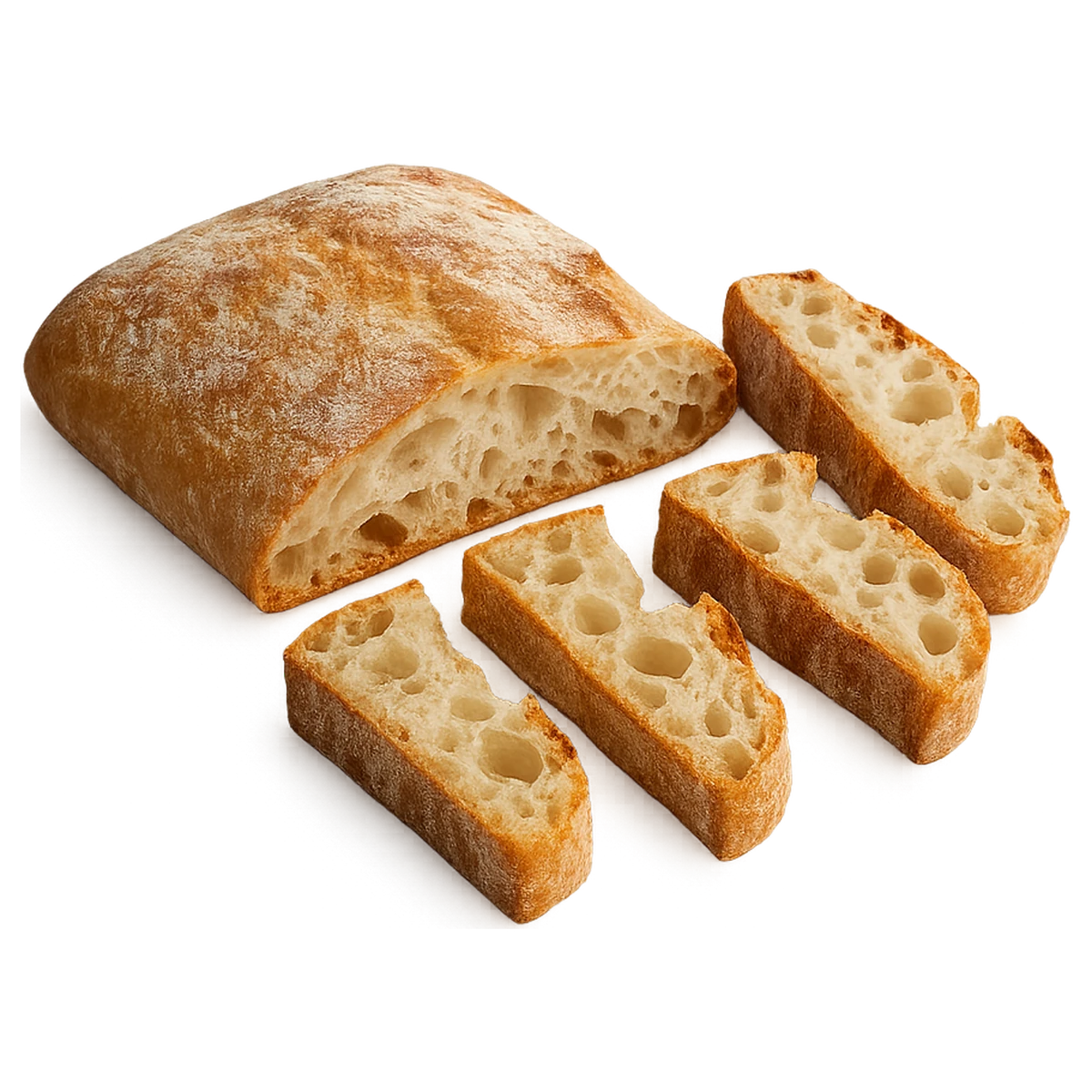
Pain de Lodève shares its origins with two other great classics of French bread baking: Pain Paillasse and Pain Rustique. Its distinctive feature is the shaping: the dough is simply cut into pieces and baked without being shaped at all.
The key to the recipe is the choice of flour: traditionally, French Type 65 (T65) flour is used. As an alternative, you can blend 90% strong type-0 wheat flour with 10% whole wheat flour; don't leave out the whole rye flour called for in the recipe.
With hydration close to 84%, the dough needs the bassinage technique, adding the last part of the water gradually toward the end of mixing to develop the structure properly.
Finally, it's essential to bake it well and all the way through: the contrast between the thick, crisp crust and the moist, fragrant crumb is simply irresistible.
This recipe is freely inspired by, or adapted from, a formula by Master Jeffrey Hamelman.
At a glance
- Method: Preferment, with autolyse (1 hour)
- Preferment: Sourdough starter — 15% of the flour
- Mixing: Stand mixer
- Number of pieces: 1
- Weight per piece: 1000 g
- Preferment weight: 133 g
- Dough weight: 867 g
- Total dough weight: 1000 g
Want to change the number of pieces, their weight or anything else? The calculator redoes the quantities. Open the calculator
Ingredients
Quantities for 1 piece of 1000 g, kitchen at 21 °C
Preferment
- Wheat flour (W340)58 g
- Wheat flour (Whole wheat, W290)18 g
- Water41 g
- Sourdough starter15 g
Dough
- Wheat flour (W340)447 g
- Water406 g
- Salt12 g
- Malt syrup1.1 g (half a teaspoon)
- Yeast1.1 g
Want to change the ingredients or use your own flour? The calculator redoes quantities and timing. Open the calculator
Method
- Rinfresca il lievito madre (vedi note)
- Lievito madre: make it and let it ferment (at room temperature) (2 hours)
- Weigh the ingredients
- Use water at 30 °C
- Mix the flour, water and starter until you get a smooth batter
- Transfer to a container, covered but not airtight
- Put the dough in the fridge, covered (12 hours)
- Weigh the ingredients and knead (1 h 40 min)
- Use water at 33 °C
- Hold back 136 g of water and pour it in gradually while it comes together
- End of mixing, start of bulk rise (at room temperature) (3 hours)
- Reinforcement fold 1 of 2
- Reinforcement fold 2 of 2
- Divide/shape, start proofing (at room temperature) (35 min)Very hydrated dough: Don't divide it into pieces bigger than your chosen size, or it struggles to bake through in the middle. It's neither pre-shaped nor shaped — handle it gently to avoid degassing; once divided, set it better-side-down onto floured couche linen.20 to 50 minutes, depending on dough strength (the stronger the dough, the longer it takes).
- Ready to cookScore with a serrated blade (the dough is sticky) — one large diamond shape on the surface ("pain Polka").
Want to change when you start or when you bake? The calculator gives you the schedule with exact times. Open the calculator
Baking
- conventional oven, with steam
- Overall temperature: 260 °C
- Time: 10 minutes
- Normal steam
- conventional oven, without steam
- Overall temperature: 240 °C
- Time: 23 minutes
- Lower the temperature and finish the bake.
The calculator adapts baking times to the weight of your pieces. Open the calculator
Preparation notes
- Refreshing the starter
- Mix flour, water at 55%, and starter at 10% (percentages on this refresher's own flour, not the recipe's total flour) until incorporated. Cover and let sit 7 hours at 21 °C.
- Bassinage
- Hold back part of the water from the recipe and pour it in gradually toward the end of mixing, once the gluten has developed.
Want to change something?
Open the calculator